Best IPTV Subscription Buying Guide: How to Choose, Test, and Stream in 2026
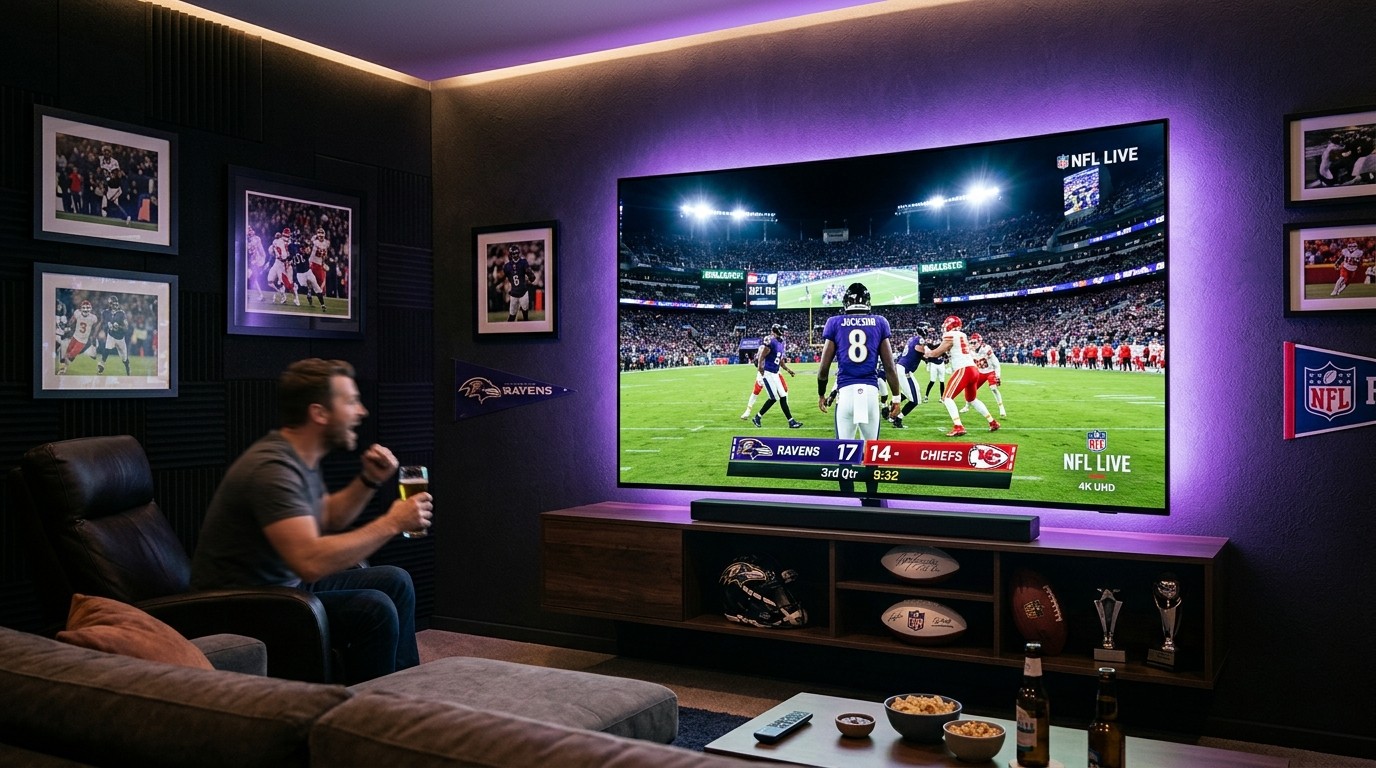
With thousands of services advertising endless channel lists and impossibly low rates across social media, choosing the right IPTV subscription has become one of the most frustrating challenges in modern home entertainment. Many cord-cutters rush into the cheapest service they find, only to experience devastating stream freezes during the final minutes of a championship soccer match, missing EPG channel guides, and customer service teams that vanish overnight.
Finding a truly reliable, enterprise-grade IPTV service like BINGETRAX requires looking far beyond the superficial monthly price tag. It demands understanding how television is transmitted over packet-switched Internet Protocol networks, recognizing the infrastructure required to deliver 60 frames-per-second sports without packet drop, and knowing how to stress-test a service before committing your hard-earned money.
This comprehensive master guide breaks down everything you need to evaluate before purchasing an IPTV subscription in 2026—from server hardware architectures, adaptive bitrate delivery, and content distribution networks (CDNs) to network optimization, player configuration, and anti-scam verification protocols.
1. The Modern Cord-Cutting Revolution: Why Traditional Cable Is Obsolete
For decades, traditional cable television and satellite providers held a monopolistic grip on home entertainment. Consumers were forced into expensive 24-month contracts, required to rent bulky, power-hungry set-top boxes for every room, and subjected to unpredictable regional sports fees, broadcast surcharges, and scheduled annual price hikes.
When standalone streaming apps like Netflix, Prime Video, and Disney+ first entered the market, cord-cutting promised financial relief and consumer autonomy. However, by 2026, the streaming landscape has fractured into dozens of walled gardens. To follow live sports, domestic news, international broadcasts, and premium movies today, a household is often forced to subscribe to five or six separate platforms—such as Peacock, Paramount+, ESPN+, Apple TV+, DAZN, and YouTube TV—pushing monthly entertainment expenditures well past $160 to $200 per month.
Furthermore, traditional cable delivery relies on rigid radio frequency (RF) quadrature amplitude modulation (QAM) pipelines or fixed satellite transponder bands. When severe weather hits, satellite dishes lose signal due to rain fade. When cable distribution nodes become congested or lines degrade, visual macroblocking and compression artifacts degrade picture quality to muddy 720p or 1080i signals.
Internet Protocol Television (IPTV) completely re-engineers this delivery paradigm. Rather than broadcasting an entire spectrum of hundreds of channels down a physical coax or satellite pipe simultaneously, IPTV delivers content digitally over standard internet protocol networks using a client-server unicast or multicast model. When you change channels, your playback client sends a lightweight request to an edge server, which immediately begins streaming only that specific video feed to your display.
By centralizing content delivery over high-speed global fiber networks, a premium service like BINGETRAX delivers uncompressed live television, comprehensive global sports packages, and massive on-demand libraries in pristine 4K UHD and Full HD at a fraction of the cost of legacy cable.
2. How Modern IPTV Architecture Works: Under the Hood
To distinguish between amateur resellers and enterprise-grade streaming platforms, you must understand the technical architecture governing IPTV delivery. An IPTV ecosystem is not a simple playlist file hosted on a random web server; it is a complex, multi-tiered digital broadcast transmission pipeline.
[Satellite / Fiber Feeds]
         │
         ▼
[Ingestion & Dedicated Transcoding Encoders] (H.264 / H.265 / AV1)
         │
         ▼
[Origin Media Cluster & Anti-DDoS Gateway]
         │
         ├───> [Edge CDN Node: North America] ───> Local ISP Peering ───> End User Player
         ├───> [Edge CDN Node: Western Europe] ───> Local ISP Peering ───> End User Player
         └───> [Edge CDN Node: Global Regional] ───> Local ISP Peering ───> End User Player
Ingestion, Transcoding, and Encoding
The pipeline begins at dedicated ingest facilities equipped with commercial satellite reception arrays and direct fiber optic feeds from major broadcast networks. Raw linear video feeds arrive at extraordinarily high bitrates (often 20 to 50 Mbps per channel in uncompressed MPEG-2 or uncompressed transport streams).
These raw signals are ingested by high-performance hardware encoders equipped with modern GPU acceleration (such as Nvidia NVENC or AMD VCN) and dedicated FPGA processing boards. The encoders transcode the video streams into modern digital distribution codecs:
- H.264 / MPEG-4 AVC: The universal standard ensuring broad compatibility with legacy hardware, smart TVs, and mobile devices.
- H.265 / HEVC (High Efficiency Video Coding): Delivers superior visual clarity at 50% lower bitrates compared to H.264. Crucial for pristine 4K HDR and high-frame-rate 60fps sports broadcasts.
- AV1 (AOMedia Video 1): The state-of-the-art open royalty-free codec delivering exceptional compression efficiency, adopted by cutting-edge providers to stream high-fidelity video over bandwidth-restricted connections.
Origin Servers and Anti-Freeze CDN Distribution
Once encoded, live video streams are fed into central origin media server clusters. If thousands of viewers were to connect directly to these origin servers simultaneously, the network interfaces would instantly saturate, resulting in dropped frames, extreme packet loss, and system-wide service crashes.
To eliminate this bottleneck, premium providers deploy a Content Distribution Network (CDN) architecture. Origin servers push video stream segments to dozens of geographically distributed edge caching nodes located in major Internet Exchange Points (IXPs) worldwide (such as Frankfurt, London, New York, Dallas, and Amsterdam).
When an end user in London tunes into a Premier League match on BINGETRAX, their streaming device connects to a localized UK edge server located mere milliseconds away, rather than routing traffic across an ocean. This edge architecture drastically reduces latency, prevents network routing congestion, and forms the bedrock of true "anti-freeze" technology.
Streaming Protocols: HLS, MPEG-TS, and Low-Latency Delivery
IPTV services deliver live streams using standardized network transport protocols:
- MPEG-TS (Moving Picture Experts Group Transport Stream): A continuous, packet-based byte-stream container over HTTP/TCP or UDP. It offers virtually instantaneous channel switching (often under 1 second) and very low latency, making it the preferred protocol for live sports enthusiasts using dedicated player apps like TiviMate.
- HLS (HTTP Live Streaming): Developed by Apple, HLS breaks down the video stream into short discrete chunks (typically 2 to 6 seconds in duration) delivered via standard HTTP/HTTPS GET requests, coordinated by an
.m3u8index playlist. HLS is rock-solid and traverses restrictive firewalls with ease, though it introduces slightly higher broadcast delay unless optimized with Low-Latency HLS (LL-HLS). - Xtream Codes API: An industry-standard HTTP-based authentication and metadata delivery framework. Rather than forcing users to manually download and parse giant 50-megabyte text playlists, the Xtream Codes API allows player apps to dynamically query categories, channel streams, live EPG data, and on-demand metadata on the fly using structured JSON calls.
Experience True 4K IPTV with Zero Buffering
Tired of frozen streams during major matches? BINGETRAX delivers 99.9% uptime, dedicated anti-freeze CDN edge servers, and crystal-clear 4K sports feeds on any device.
View Subscription Plans3. Core Evaluation Criteria: What to Look for in a Premium IPTV Subscription
When comparing IPTV providers, marketing slogans like "over 20,000 channels" tell you almost nothing about the actual streaming experience. Use the following technical pillars to evaluate any prospective service.
Pillar 1: Server Stability, Uptime Guarantees, and Anti-Freeze Architecture
The single most critical attribute of an IPTV subscription is server stability. Anyone can buy an M3U playlist online and resell it, but maintaining 99.9% uptime during prime-time hours requires significant capital investment in redundant hardware and enterprise bandwidth contracts.
Inquire about or test the provider's server redundancy:
- Automated Failover: If an encoder node or upstream feed experiences hardware failure, does the service automatically switch to a secondary redundant backup feed within 2 to 3 seconds without freezing the stream?
- Bandwidth Headroom: Reputable providers maintain at least 40% to 50% surplus bandwidth capacity across their CDN clusters to absorb sudden traffic spikes when hundreds of thousands of viewers simultaneously tune into major events like the Super Bowl, El Clásico, or UFC title fights.
- Anti-Freeze Algorithmic Buffering: Services like BINGETRAX integrate smart packet pre-fetching protocols that analyze client buffer health and optimize chunk delivery rates to prevent stream stutter even during minor local Wi-Fi drops.
Pillar 2: Channel Quality, True 60fps Frame Rates, and Audio Standards
A common trick among low-tier IPTV providers is labelling a channel as "4K" or "FHD" when it is actually an upscaled 720p broadcast compressed down to a muddy 2.5 Mbps bitrate running at 25 or 30 frames per second.
For sports and fast-paced action, frame rate matters just as much as pixel resolution:
- 30fps vs 60fps in Sports: A 30fps stream exhibits noticeable stutter, judder, and motion blur whenever a soccer ball, hockey puck, or basketball moves quickly across the screen. A native 60fps (or 50fps for European PAL broadcasts) stream delivers buttery-smooth motion identical to a high-end satellite receiver.
- Bitrate Thresholds: High-quality Full HD (1080p 60fps) streams require a continuous video bitrate of 8 to 14 Mbps. Pristine 4K UHD streams require 18 to 30 Mbps. If a provider claims 4K streams that operate smoothly on a 5 Mbps ADSL connection, they are serving heavily compressed, washed-out video.
- Audio Codecs: High-tier IPTV services provide clean Dolby Digital AC3, AAC 5.1 surround sound, or uncompressed stereo audio, rather than muddy mono or low-sample-rate MP3 audio feeds.
Pillar 3: Electronic Program Guide (EPG) and Catch-Up Functionality
Television is unwatchable without an accurate, comprehensive TV guide. A broken or missing Electronic Program Guide (EPG) turns browsing thousands of channels into an exercise in pure guesswork.
Evaluate the provider's EPG implementation:
- EPG Completeness: Does the guide populate for 95%+ of major national, international, and sports channels with accurate show titles, detailed episode summaries, and real-time timeline markers?
- Timezone Synchronization: Does the service allow seamless timezone offset adjustments (+/- hours) so your local schedule matches the broadcast schedule regardless of where you live in the world?
- Catch-Up TV (Time-Shift DVR): Premium IPTV subscriptions offer 48-hour to 7-day server-side catch-up on popular networks. This feature allows you to rewind, pause, or watch past broadcasts directly from the EPG grid without needing a local hard drive or external recording device.
Pillar 4: Video-on-Demand (VOD) Library Depth and Update Frequency
While live television is the primary draw for IPTV, a top-tier service replaces the need for separate movie streaming subscriptions by offering an expansive, updated Video-on-Demand (VOD) catalog.
Key VOD factors to examine:
- Catalog Freshness: How quickly are newly released theatrical movies and streaming platform series added to the server? Leading providers update their on-demand servers within 24 to 48 hours of digital release.
- Multi-Subtitles and Audio Tracks: Premium VOD files include selectable soft subtitles (SRT/WebVTT) in multiple languages (English, Spanish, French, German, Arabic) and dual-audio tracks (5.1 surround sound and original language options).
- Source Quality: Look for 4K HDR10, Dolby Vision, and 1080p Blu-ray Remux sources with high audio bitrates rather than camcorded theater recordings.
Pillar 5: Device Compatibility and Multi-Connection Flexibility
Your IPTV subscription must function seamlessly across every screen in your household. Avoid services locked to proprietary, closed-source hardware.
Top IPTV services support standard credentials compatible with the industry's best open streaming hardware and applications:
- Hardware Platforms: Amazon Fire TV Stick 4K Max, Nvidia Shield TV Pro, Apple TV 4K, Google Chromecast with Google TV, Android TV boxes, Samsung Smart TVs (Tizen OS), LG Smart TVs (webOS), Windows PC, macOS, iPads, iPhones, and Android smartphones.
- Supported Connection Types: Full support for both Xtream Codes API (recommended for modern player apps) and M3U / M3U8 playlist URLs.
- Concurrent Connections: Determine how many devices can stream simultaneously under a single account. Budget services restrict you to one single device, terminating your stream if someone in another room switches on a TV. BINGETRAX provides scalable multi-connection options so the whole family can enjoy independent streams simultaneously.
4. Understanding Video Codecs, Bitrates, and Resolution Metrics
To make an educated buying decision, it helps to understand the technical metrics that dictate streaming quality. The following comparison table outlines the real-world bandwidth and technical specifications required for different tiers of IPTV video playback:
| Resolution Tier | Frame Rate | Video Codec | Recommended Stream Bitrate | Minimum Stable Internet Speed | Best For |
|---|---|---|---|---|---|
| Standard HD (720p) | 30 / 60 fps | H.264 / AVC | 3.0 – 5.0 Mbps | 15 Mbps | Mobile phones, older tablets, slow DSL lines |
| Full HD (1080p Standard) | 30 fps | H.264 / H.265 | 5.5 – 8.0 Mbps | 25 Mbps | General entertainment, news broadcasts, sitcoms |
| Full HD Sports (1080p60) | 60 fps | H.265 / HEVC | 9.0 – 14.0 Mbps | 40 Mbps | Premier League, NFL, NBA, fast-motion sports |
| Ultra HD 4K (2160p) | 60 fps | H.265 / AV1 | 18.0 – 30.0 Mbps | 70+ Mbps | Large OLED/QLED TVs, 4K HDR movies, PPV events |
The Critical Role of Hardware Video Decoding
When your streaming device receives high-bitrate H.265 or AV1 data packets, its processor must decode millions of pixels every second in real time.
- Software Decoding (CPU): If your streaming hardware lacks dedicated silicon decoders for H.265 or AV1, it falls back to software decoding. This forces the device's main CPU cores to run at 100% capacity, generating excessive heat, severe frame drops, audio desynchronization, and frequent app crashes.
- Hardware Decoding (GPU/VPU): Modern streaming devices (such as the Amazon Fire TV Stick 4K Max 2nd Gen, Nvidia Shield TV Pro, and Apple TV 4K) feature dedicated video processing units (VPUs). Hardware decoding offloads the entire video decompression pipeline, keeping CPU utilization under 15% and ensuring smooth 60fps playback without a single dropped frame.
5. Major Red Flags: How to Avoid IPTV Scams and Low-Tier Resellers
The IPTV industry contains thousands of amateur sellers operating with minimal technical knowledge and no real server infrastructure. Protecting your money and security requires learning how to identify the most common industry traps.
[RED FLAG WARNING MATRIX]
┌───────────────────────────────────────────────┬───────────────────────────────────────────────┐
│ The Offer                                     │ The Harsh Reality                             │
├───────────────────────────────────────────────┼───────────────────────────────────────────────┤
│ "Lifetime Subscription for $50"               │ Exit scam. Provider shuts down in 3-6 months. │
│ "Over 100,000 Live Channels"                  │ 80% dead links, duplicate feeds, fake lists.  │
│ Anonymous Telegram / WhatsApp Only Sales      │ Zero accountability, no refunds, ghosted.     │
│ Crypto-Only with No Card / Secure Gateways    │ Untraceable payments with zero buyer recourse.│
│ Zero Free Trial or Paid 24-Hour Test Window   │ Hiding severe prime-time server congestion.   │
└───────────────────────────────────────────────┴───────────────────────────────────────────────┘
Red Flag 1: The "Lifetime Subscription" Trap
Whenever you encounter an advertisement promising a "Lifetime IPTV Subscription for a one-time fee of $49 or $89," walk away immediately.
Operating a global streaming network requires immense ongoing operating expenditures: continuous server rental costs, multi-gigabit Tier 1 bandwidth transit fees, encoder hardware maintenance, satellite feed access licenses, and customer support payroll. A one-time fee of $50 cannot possibly cover the recurring monthly costs of a viewer streaming hundreds of gigabytes of high-definition video data over several years.
Services offering "lifetime" access are classic exit scams. They collect lump-sum upfront fees from thousands of unsuspecting buyers, oversaturate their servers until streams grind to a halt, and disappear within 3 to 6 months—only to rebrand under a new name and repeat the scheme. Sustainable, enterprise-grade IPTV operates strictly on predictable monthly, quarterly, or annual subscription cycles.
Red Flag 2: Inflated Channel Counts (The 80,000 Channel Myth)
Marketing departments love quoting astronomical channel figures. When a provider claims to offer "80,000 to 150,000 live channels," an audit of the playlist reveals the truth:
- Thousands of broken, offline streams that display perpetual loading spinners.
- Dozens of identical duplicate feeds for a single network, differing only by pixelated, unwatchable compression levels.
- Obsolete public webcams, non-functioning regional community access feeds, and automated loop streams.
A bloated channel list is a massive detriment to your streaming experience. Loading a 100,000-channel playlist bogs down your streaming device's RAM, causing apps like TiviMate or IPTV Smarters to crash, lag while scrolling, or take 10 minutes just to launch. High-tier providers curate clean, well-organized playlists containing working, high-bitrate channels grouped cleanly by country, genre, and resolution.
Red Flag 3: Untraceable Communication and Payment Methods
Legitimate technology providers operate transparent web portals with secure SSL encryption (HTTPS), clear terms of service, comprehensive installation tutorials, and professional ticketing systems.
If a seller operates exclusively through temporary Telegram channels, Discord servers, or WhatsApp numbers, and demands payment via untraceable cryptocurrency or peer-to-peer friends-and-family transfers, you have zero recourse if the service degrades or ceases operation. Look for providers that accept secure international credit cards or reputable payment gateways that protect consumer transactions.
Red Flag 4: Refusing to Offer Trials or Test Windows
If a provider has total confidence in the stability and quality of their server infrastructure, they will gladly offer a free trial or a low-cost 24-hour test pass. Providers who refuse to offer trials almost always do so because their servers collapse under peak evening traffic, and they know that any customer who tests the stream before paying will instantly walk away.
6. Home Network Optimization: How to Guarantee Buffer-Free Streaming
Even the world's most advanced IPTV server infrastructure cannot overcome a poorly configured home Wi-Fi network or an aggressive Internet Service Provider (ISP). Before blaming your IPTV provider for buffering, execute these proven network optimization techniques.
Wired Ethernet vs 5GHz Wi-Fi
While modern Wi-Fi is convenient, radio frequencies are susceptible to physical interference from walls, metal appliances, and neighboring wireless routers on identical radio channels.
- The Gold Standard: CAT6 Wired Ethernet. Whenever physically possible, connect your streaming device (such as an Apple TV 4K or Nvidia Shield Pro) directly to your home router using a CAT6 Ethernet cable. Ethernet delivers zero packet loss, ultra-low jitter (< 2ms), and consistent bandwidth throughput unaffected by wireless interference.
- If You Must Use Wi-Fi: Connect Exclusively to the 5GHz or 6GHz Band. The legacy 2.4GHz Wi-Fi band is crowded, prone to heavy packet collision from Bluetooth devices and microwaves, and tops out at realistic real-world speeds of 30 to 45 Mbps. Switch your streaming box to your router's 5GHz band, which delivers 300 to 800+ Mbps throughput and significantly lower latency. Ensure your streaming stick is not tucked tightly behind a thick metal TV chassis where signal attenuation occurs; use an HDMI extender cable to position the device in open air.
ISP Throttling and How to Defeat Deep Packet Inspection (DPI)
Many major Internet Service Providers (particularly in the UK, US, and Canada during major live Premier League or NFL fixtures) employ automated Deep Packet Inspection (DPI) technology.
When your ISP detects massive, sustained UDP or TCP data transfers from known IPTV media server IP addresses or video port ranges (such as ports 80, 8080, 8000, 25461), their automated traffic shaping algorithms throttle your connection speed down to 1.5 Mbps. This artificial bandwidth restriction forces your video player into a perpetual buffer underrun state, causing freezes every 15 to 30 seconds despite your speed test showing 500 Mbps on other websites.
[ISP Throttling Mechanism]
User Request ───> [ISP Deep Packet Inspection] ───(Detected IPTV Stream)───> Throttled to 2 Mbps ───> Freezing
                                  │
                                  ▼
User + VPN ───> [Encrypted Tunnel (WireGuard)] ───(ISP Sees Random Noise)───> Full 500 Mbps Speed ───> Smooth 4K
To bypass ISP throttling:
- Deploy a High-Performance VPN with the WireGuard Protocol: Encrypting your network traffic with a top-tier virtual private network conceals the destination IP address and packet contents from your ISP's automated inspection engines. Because your ISP can only see random, encrypted WireGuard data flowing to a secure server, they cannot selectively throttle your video stream.
- Switch to Public Encrypted DNS: Many ISPs silently hijack or throttle video services via DNS filtering. Configure your router or streaming device to use independent, privacy-focused DNS resolvers such as:
- Cloudflare DNS:
1.1.1.1(Primary) and1.0.0.1(Secondary) - Google DNS:
8.8.8.8(Primary) and8.8.4.4(Secondary) - Quad9 DNS:
9.9.9.9(Primary) and149.112.112.112(Secondary)
- Cloudflare DNS:
7. The Ultimate 7-Step Protocol for Stress-Testing an IPTV Free Trial
When you obtain a trial from a provider like BINGETRAX, do not simply turn on a random news channel for two minutes and assume everything is fine. You must execute a rigorous, systematic stress test during high-stress conditions to verify real server capability.
Step 1: Benchmark Your Baseline Network Health
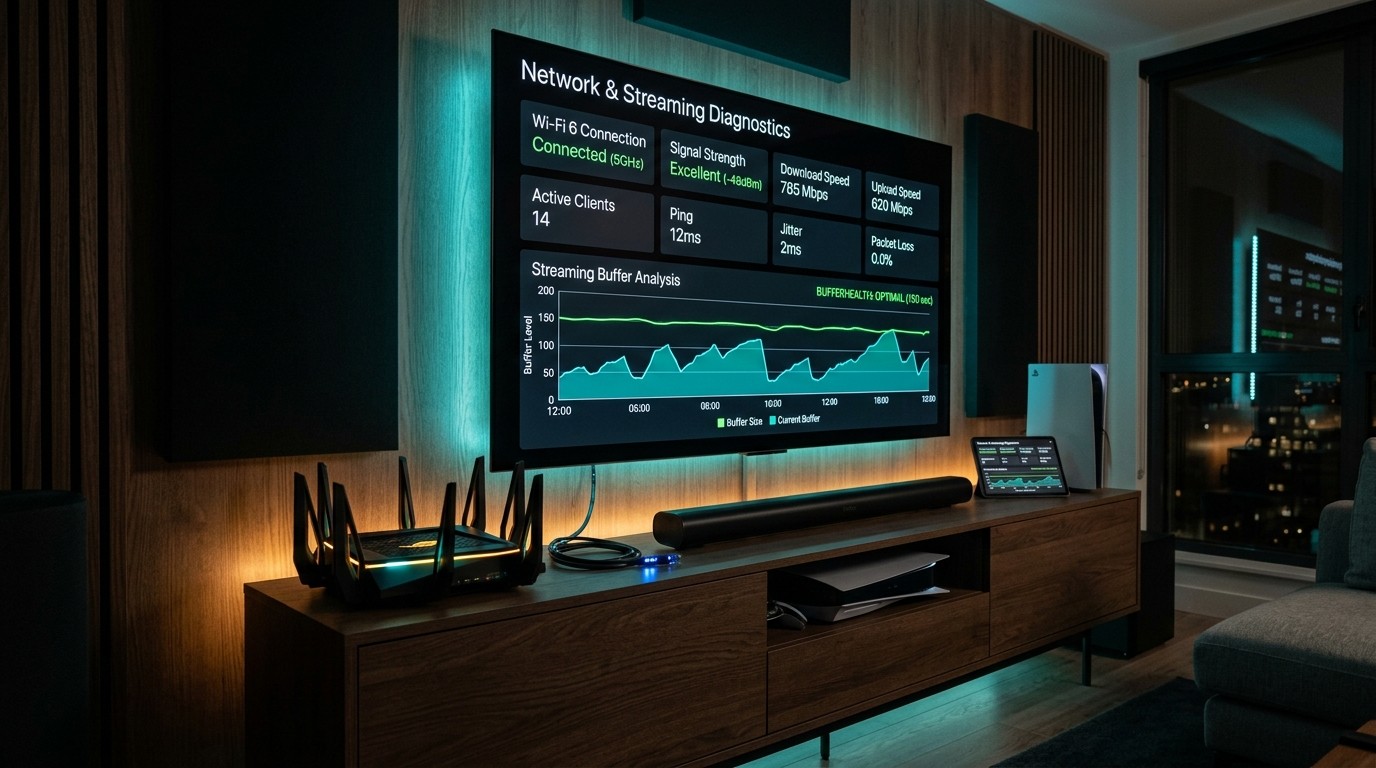
Before launching your IPTV application, perform a network diagnostic test on your streaming device using a tool like Analiti or fast.com:
- Verify that your download speed is at least 30 to 50 Mbps.
- Check that your latency (ping) is under 35ms.
- Ensure your network jitter is under 4ms and packet loss is strictly 0.0%. High jitter indicates local network instability that will manifest as video stutter.
Step 2: Test Exclusively During Peak Congestion Hours
Testing an IPTV service on a Tuesday morning at 10:00 AM reveals very little about its true server architecture. Run your primary tests during peak weekend streaming windows:
- Saturday afternoon between 2:30 PM and 5:30 PM UK / European time (Premier League matches).
- Sunday evening between 7:00 PM and 10:00 PM US time (NFL / prime-time television). If the service streams smoothly during these high-concurrency windows without buffering or degradation, the provider has deployed enterprise-grade CDN edge scaling.
Step 3: Measure Channel Zapping Speed
Channel switching latency is a direct indicator of server response time and proper edge caching:
- Navigate through 10 consecutive live channels in different categories.
- A premium service paired with a modern hardware client (like TiviMate on Firestick 4K Max) should zap from channel to channel in under 1.2 to 1.8 seconds.
- If channel changes take 5 to 8 seconds or frequently stall on a black screen, the provider's stream endpoints are overloaded or improperly routed.
Step 4: Audit Video Resolution and Native Frame Rates
Check the video player's technical on-screen display (OSD) or codec stats during playback:
- Verify that major sports networks (Sky Sports, TNT Sports, ESPN, beIN Sports) are streaming at a native 1080p resolution at 50fps or 60fps, rather than 25/30fps.
- Inspect fast panning shots (such as a long pass in football or a camera tracking a Formula 1 car). The motion should remain pin-sharp with zero combing artifacts or stutter.
Step 5: Test Audio Track and Subtitle Switching
Switch between alternate audio tracks on international and movie channels:
- Confirm that secondary audio channels (such as ambient stadium noise feeds or multi-language commentary) engage cleanly without causing the video stream to crash.
- Test soft subtitle rendering on VOD movie titles to ensure subtitles stay synchronized with speech.
Step 6: Verify EPG Sync and Catch-Up DVR Playback
Navigate back through the TV guide to a show that broadcasted 12 or 24 hours ago:
- Click the program to test the Catch-Up feature.
- The past broadcast should begin playing immediately. Test fast-forwarding 30 seconds ahead and rewinding 10 seconds back. A well-engineered media server handles time-shifted seek commands within 1 to 2 seconds.
Step 7: Test Customer Support SLA
Send a technical configuration question or channel inquiry through the provider's support portal or live chat during the trial. Take note of their response time, technical competence, and professionalism. An enterprise provider responds promptly with actionable solutions, while amateur resellers leave tickets unanswered for days.
8. Best IPTV Player Applications: Configuring for Peak Performance
Even the most robust IPTV subscription requires a capable client application to parse playlists and decode streams. Here are the premier applications available in 2026 and how to configure them for optimal stability:
[IPTV PLAYER ECOSYSTEM]
┌─────────────────────────┬──────────────────────────┬──────────────────────────────────────────┐
│ Application             │ Primary Platforms        │ Best Highlights                          │
├─────────────────────────┼──────────────────────────┼──────────────────────────────────────────┤
│ TiviMate IPTV Player    │ Android TV, Fire OS      │ Best UI, Multi-View, Quad-Screen, AFR    │
│ IPTV Smarters Pro       │ iOS, Android, Smart TVs  │ Multi-platform, Easy Xtream Codes setup  │
│ iPlayTV / UHF           │ Apple TV 4K, tvOS, iOS   │ Native tvOS design, iCloud sync, fluid  │
│ Nanomid Player          │ Samsung Tizen, LG webOS  │ Direct Smart TV app without external box │
│ SFVIP Player / VLC      │ Windows PC, macOS        │ Low hardware overhead, direct stream log │
└─────────────────────────┴──────────────────────────┴──────────────────────────────────────────┘
TiviMate IPTV Player (Android TV / Firestick)
TiviMate is widely regarded as the pinnacle of IPTV player software. Designed exclusively for television remote control interfaces, it replicates the premium feel of high-end satellite receivers.
- Buffer Size Optimization: In TiviMate settings (
Settings > Playback > Buffer Size), set your buffer size to Medium (3 to 5 seconds) or Large if you experience occasional micro-drops on Wi-Fi. This provides an elastic safety margin preventing dropped frames. - Auto Frame Rate (AFR): Enable AFR (
Settings > Playback > Auto Frame Rate). This feature commands your TV display to automatically switch its native refresh rate to match the incoming stream (e.g., switching to 50Hz for European football or 60Hz for US basketball), completely eliminating judder. - Multi-View: TiviMate allows you to watch up to 4 or 9 live screens simultaneously on high-performance devices like the Nvidia Shield Pro—ideal for tracking multiple sports matches simultaneously.
IPTV Smarters Pro (Multi-Platform)
IPTV Smarters is the most versatile cross-platform application, available across Android, iOS, Windows, Mac, and Samsung/LG Smart TV app stores.
- Connect using Xtream Codes API rather than entering a giant M3U URL. Entering your Server URL, Username, and Password ensures automatic categorization and faster EPG syncing.
- Switch the internal media player engine from default to VLC Player or Hardware Accelerated ExoPlayer in the app's internal settings if you encounter audio sync discrepancies.
9. Comprehensive Comparison: Free Web Streams vs Budget Resellers vs BINGETRAX Premium
To visualize the architectural and quality differences across the IPTV landscape, review this detailed comparison matrix:
| Feature & Metric | Free Web Streams / Scrapers | Budget Reseller ($3–$6/mo) | BINGETRAX Premium IPTV |
|---|---|---|---|
| Server Infrastructure | Ad-funded public links | Shared single virtual VPS | Multi-cluster dedicated CDN edge network |
| Uptime Guarantee | Completely unstable (0–50%) | 75% – 85% (crashes during sports) | 99.9% Enterprise Uptime SLA |
| Stream Frame Rates | 25 – 30 fps (heavy judder) | Mostly 30 fps, fake 60 fps | True Native 60 fps & 50 fps |
| 4K Ultra HD Availability | None (fake labels) | Rarely functional / low bitrate | Pristine 4K UHD with HDR10 |
| Anti-Freeze Technology | None | Basic client buffer | Server-side smart packet pacing |
| EPG TV Guide Support | None | Frequently broken or delayed | Full 7-Day Auto-Sync XMLTV EPG |
| Catch-Up TV (DVR) | None | Rarely available | Up to 7-Day Server-Side Catch-Up |
| VOD Movie/Series Library | None or broken | Outdated, missing subtitles | 50,000+ Titles with 4K HDR & Multi-Subs |
| Concurrent Connections | 1 (heavily throttled) | Strictly 1 device | 1 to 5 Multi-Room Connections |
| Customer Support | Zero | Ignored tickets / disappearing chat | 24/7 Dedicated Technical Support |
Set Up BINGETRAX on Any Device in Minutes
Whether you stream on Amazon Firestick 4K, Apple TV 4K, Android TV, or Smart TV, our step-by-step setup guides will get your premium channels running instantly.
Follow Installation GuideFrequently Asked Questions
11. Final Verdict: Selecting Your Ideal IPTV Provider
Choosing the right IPTV subscription is an investment in your daily entertainment experience. Cutting the cord should not mean trading bloated cable bills for constant buffering, blurry feeds, and disappearing customer support teams.
By prioritizing enterprise-grade server infrastructure, native 60fps frame rates, robust anti-freeze CDN edge routing, transparent EPG functionality, and responsive 24/7 technical support, you can enjoy an elevated television experience that outperforms traditional cable in every measurable category.
Ready to elevate your home entertainment? Explore our flexible packages on the BINGETRAX Pricing page or follow our comprehensive Device Installation Tutorials to start streaming crystal-clear 4K live sports, premium entertainment, and on-demand cinema today.